
The fixture guide.
Six fixtures, how wide each spreads its light and where it looks best, plus a plain-English glossary of the words lighting designers use: kelvin, beam angle, voltage drop, grazing, moonlighting and more.
Every effect starts with the right fixture.
From a path light to a string of globes, each fixture has a beam, a load and a best use.
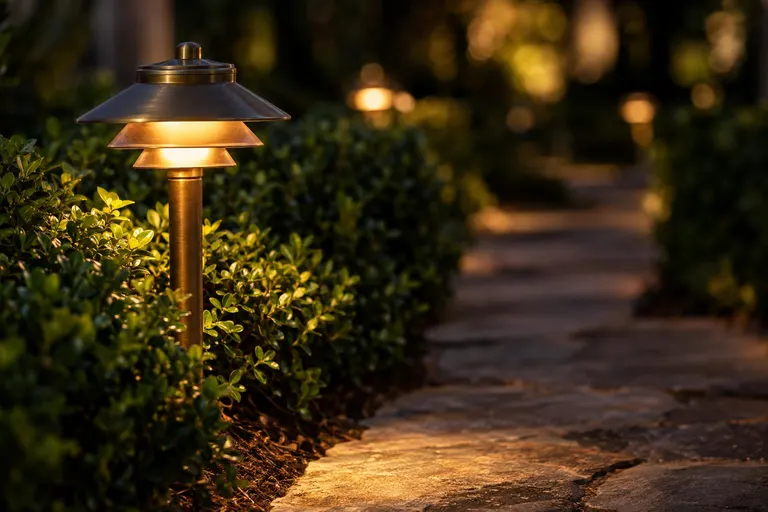
Path light
A hat that shields the lamp and throws a pool of light on the ground.
- Beam
- 36 to 90 degrees
- Typical load
- 2 to 5 W
- Best for
- Walks, drives and garden edges
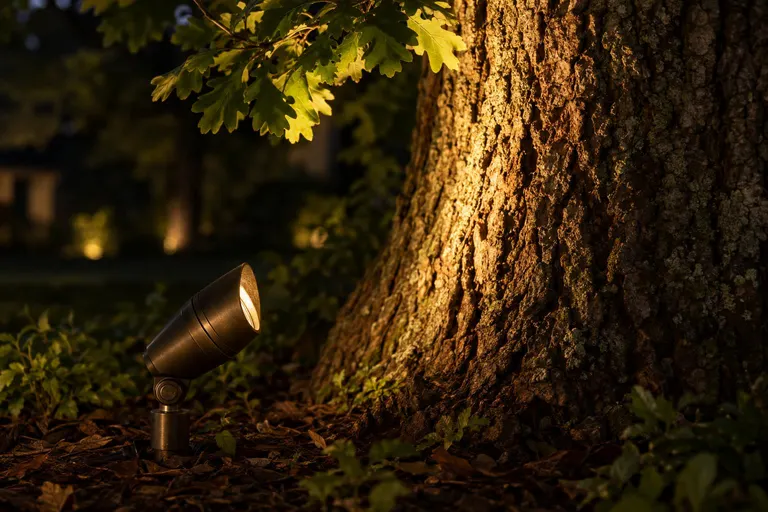
Uplight
A short fixture at the base aimed up through the trunk or onto a wall.
- Beam
- 15 to 60 degrees
- Typical load
- 4 to 8 W
- Best for
- Trees, columns and walls
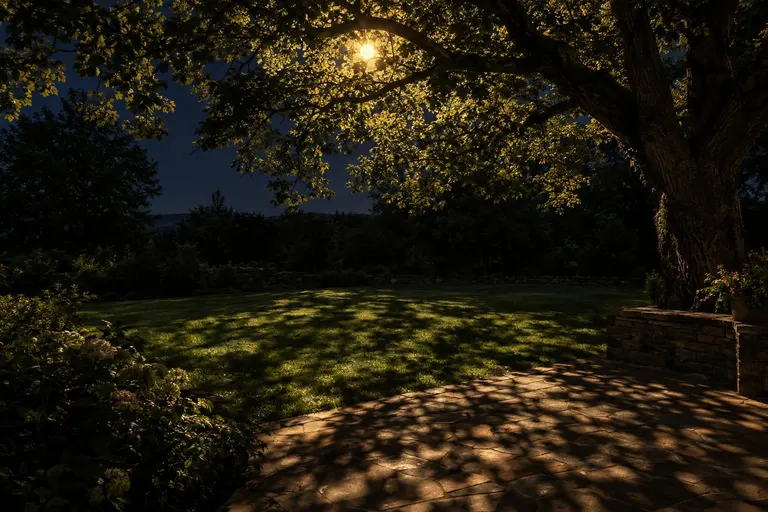
Moonlight
A fixture mounted high in a tree, shining down through the leaves.
- Beam
- 60 to 120 degrees
- Typical load
- 6 to 12 W
- Best for
- Lawns, patios and paths under big trees
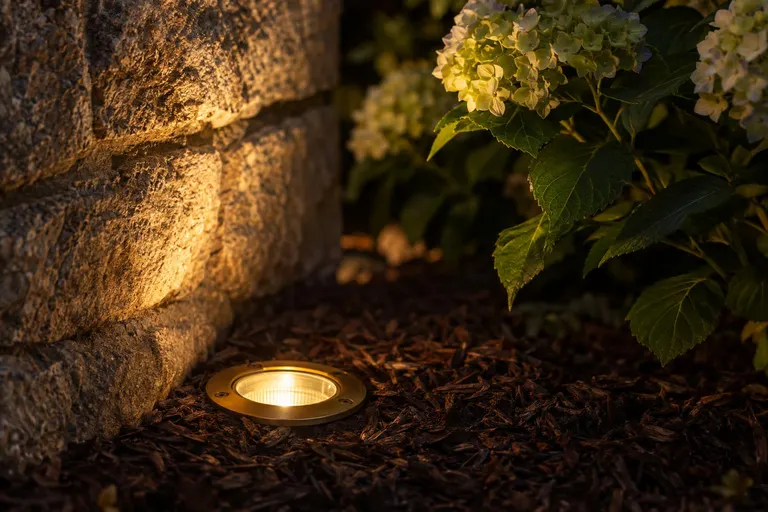
Well light
A flush fixture set in the ground that disappears when it is off.
- Beam
- 15 to 40 degrees
- Typical load
- 3 to 7 W
- Best for
- Walls, trunks and flush mounting
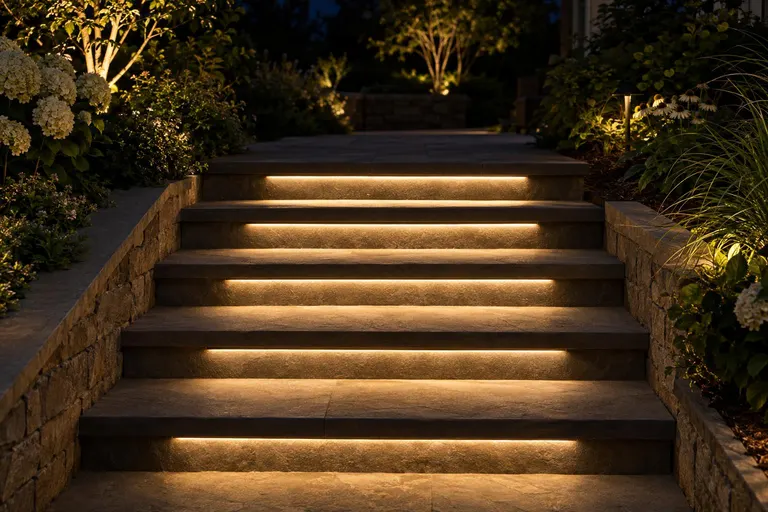
Step light
A small recessed fixture in a riser or wall that lights the tread below.
- Beam
- Wide and low
- Typical load
- 1 to 3 W
- Best for
- Steps, walls and seat edges
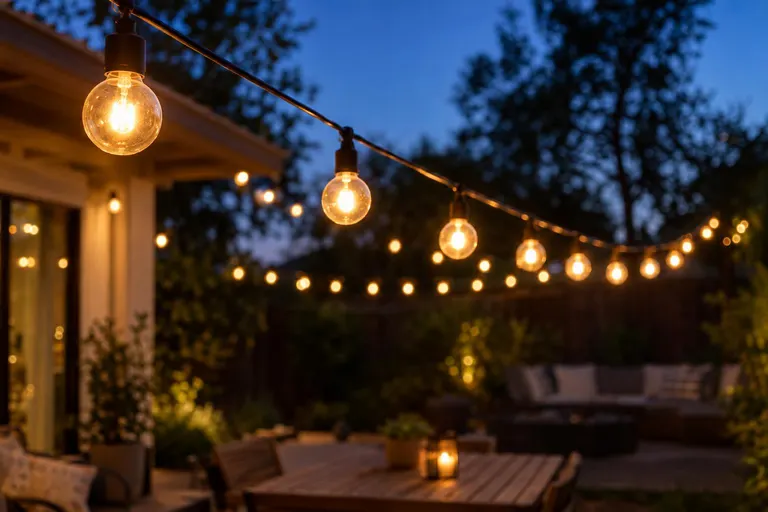
String lights
Commercial-grade globes on strong cable, hung high over a gathering space.
- Beam
- Soft and wide
- Typical load
- 10 to 15 W per strand
- Best for
- Patios, lawns and pergolas
Lighting words, in plain English.
- Low voltage
- A 12 volt landscape lighting circuit, stepped down from household power by a transformer.
- Transformer
- The box that converts household power to low voltage and feeds the wire to your fixtures.
- Voltage drop
- The loss of voltage along a wire, which makes the fixtures at the end of a long run dimmer.
- Kelvin
- The unit for color temperature. Lower is warmer and more amber, higher is cooler and bluer.
- Lumen
- A measure of how much visible light a fixture gives off.
- CRI
- Color rendering index: how true colors look under a light, on a scale up to 100.
- Beam angle
- How wide a fixture spreads its light, from narrow spots to wide floods.
- Uplight
- A fixture on the ground aimed up at a tree, column or wall.
- Downlight
- A fixture mounted high that shines down, such as lights under eaves or in a tree.
- Moonlighting
- Downlighting from high in a tree that creates soft, dappled shadows below.
- Grazing
- Placing a fixture very close to a wall so light skims across it and shows texture.
- Washing
- Spreading light evenly across a wall from a distance for a smooth glow.
- Silhouetting
- Lighting a surface behind a plant so the plant appears as a dark shape.
- Path light
- A low fixture with a hat that throws a pool of light onto a walk or bed.
- Well light
- A fixture recessed flush in the ground that aims light up at a trunk or wall.
- Shielding
- Louvers, hats and caps that hide the lamp and cut glare.
- Zone
- A group of fixtures on one circuit that you can turn on, dim or schedule together.
- Photocell
- A sensor that turns lights on at dusk and off at dawn.
- Astronomical timer
- A timer that follows the real sunrise and sunset through the year.
- Scene
- A saved combination of zones and brightness levels you can recall with one tap.
- Halogen
- An older, hot, power-hungry lamp type that LED has largely replaced.
- Hot spot
- An unwanted bright patch of light, usually from a fixture aimed too close.
Place the fixtures on a sample yard.
Open the Light Designer to see how each fixture lights a garden at night.
Found the fixture, now the yard?
A night demonstration puts real fixtures on your trees and walls so you can see them lit.